

Introduction
The military balance between Iran and Israel is one of the most closely analyzed topics in global geopolitics. Both nations possess strong but fundamentally different military capabilities shaped by strategy, alliances, and technology. This article provides a detailed comparison of Iran vs Israel military power, covering key areas such as manpower, air force strength, naval power, missile systems, defense budgets, alliances, and nuclear capabilities.
1. Manpower Comparison: Iran vs Israel
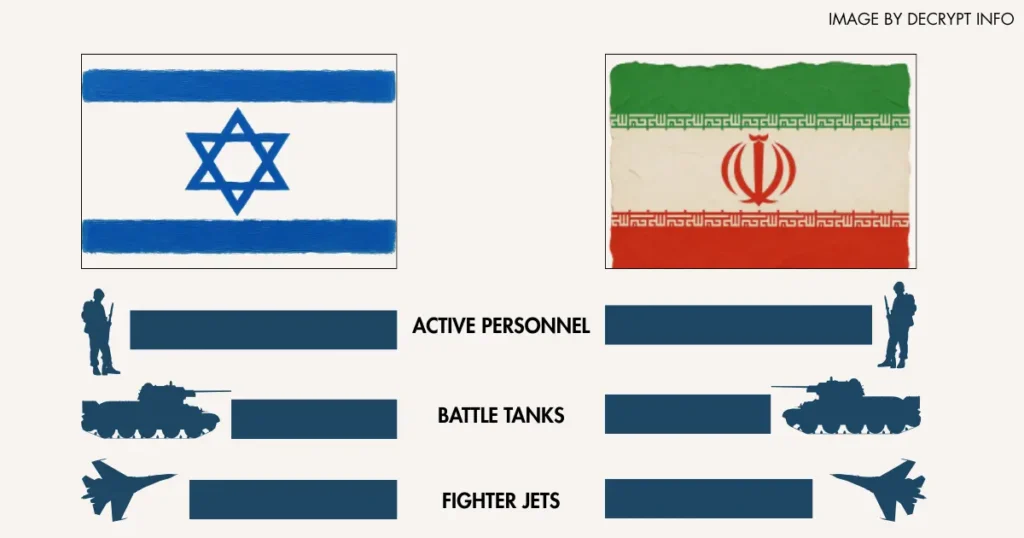
Iran has more than 600,000 active personnel, supported by approximately 350,000 reserve forces and around 220,000 paramilitary troops.
In contrast, Israel has about 170,000 active personnel, over 400,000 reserve forces, and nearly 35,000 paramilitary troops.
From a numerical perspective, Iran clearly holds an advantage in ground manpower due to its significantly larger military personnel base.
2. Air Power Comparison Between Iran and Israel
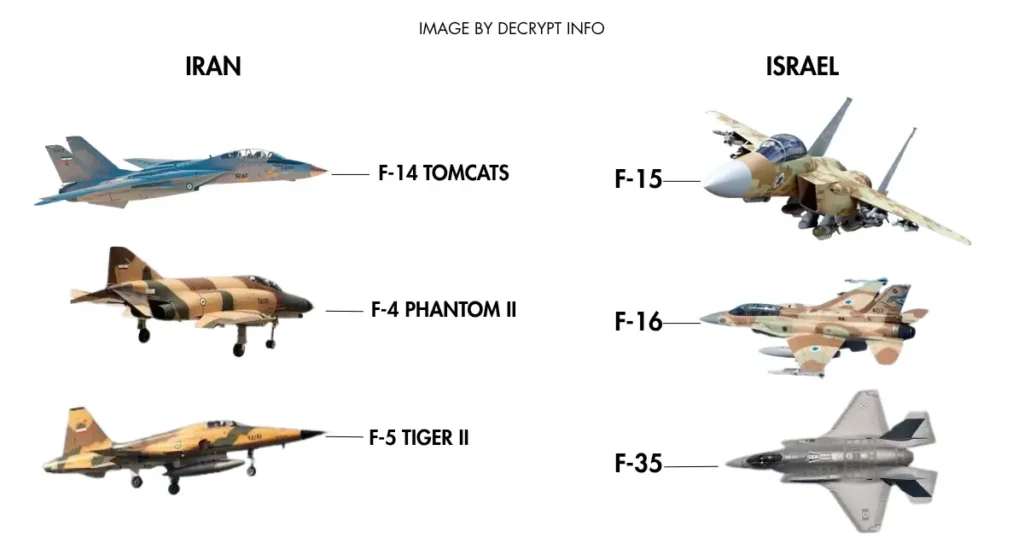
Iran operates around 186 fighter aircraft, while Israel has approximately 241 fighter jets. Iran also has about 23 dedicated attack aircraft, compared to Israel’s 39, and around 13 attack helicopters, while Israel operates nearly 48.
However, the key difference lies in technology. Iran’s air fleet consists largely of older U.S.-made aircraft along with some Russian and Chinese platforms. In contrast, Israel operates some of the world’s most advanced fighter jets, including the F-15, F-16, and F-35 stealth aircraft.
Due to this technological superiority, Israel maintains clear air dominance over Iran.
3. Naval Power Comparison
Iran operates around 68 patrol and coastal combat vessels, more than 17 submarines, and approximately seven corvettes.
Israel, on the other hand, has over 45 patrol and coastal combat vessels and around five submarines.
While Iran has a larger number of naval platforms, Israel focuses more on advanced, high-capability naval systems.
4. Missile and Drone Capabilities
Iran possesses ballistic missiles such as Emad, Fattah, and Khorramshahr, with an estimated arsenal of over 3,000 missiles.
Israel operates advanced missile systems such as the LORA and Jericho series.
In drone warfare, Iran relies heavily on low-cost, mass-produced Shahed drones, while Israel uses highly advanced reconnaissance and strike drones such as Hermes, Heron, and Harop, known for precision targeting and surveillance capabilities.
5. Air Defense Systems Comparison
Iran operates systems such as the S-300, Khordad-15, Tactical Hunter, and Bavar-373, which are effective but largely based on older or mixed-generation technology.
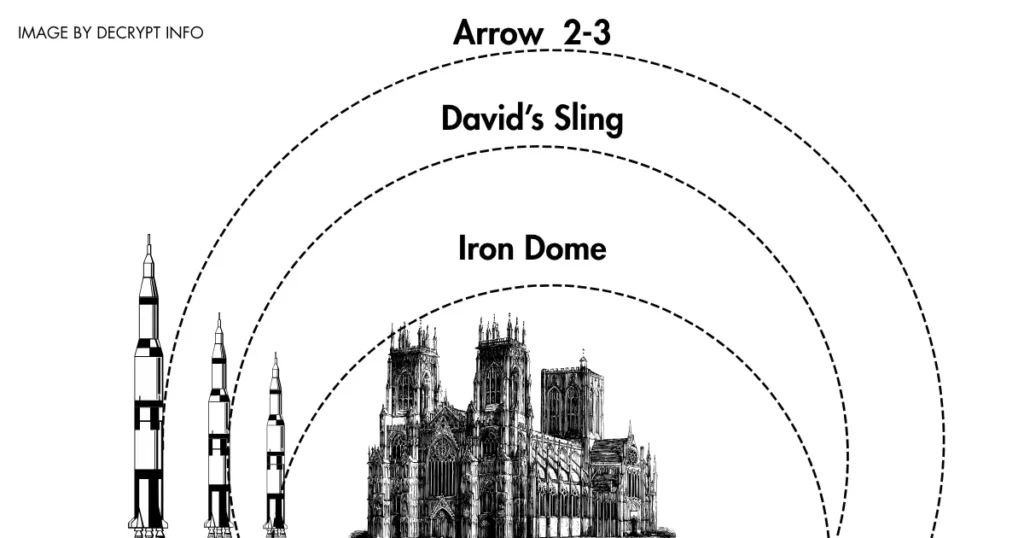
Israel, however, has one of the most advanced multi-layered defense systems in the world:
- Iron Dome (short-range rocket interception)
- David’s Sling (medium-range threats)
- Arrow System (long-range ballistic missile interception at high altitude)
This layered defense architecture gives Israel a major strategic advantage in missile defense.
6. Ground Forces and Land Power
Iran maintains over 10,000 battle tanks, more than 65,000 armored vehicles, around 580 self-propelled artillery systems, over 2,000 towed artillery units, and approximately 775 mobile rocket launchers.
Israel has around 400+ battle tanks, more than 43,000 armored vehicles, about 650 self-propelled artillery systems, over 250 towed artillery units, and nearly 150 mobile rocket systems.
While Iran dominates in quantity, Israel focuses on modern, highly advanced armored warfare systems.
7. Defense Budget Comparison
Iran’s military budget is estimated at over $10 billion, while Israel spends significantly more, exceeding approximately $27–40 billion annually.
This funding gap allows Israel to invest heavily in advanced technology, research, and defense innovation.
8. Military Alliances and Global Support
Iran’s key allies include Russia, China, and North Korea, with varying levels of strategic cooperation and support. Some countries, such as Pakistan, have played mediation roles, while others like Turkey have criticized Israeli military actions.
Iran also relies on the Axis of Resistance, a regional network that includes:
- Hamas (Gaza)
- Hezbollah (Lebanon)
- Houthis (Yemen)
- Iraqi armed groups such as Kataib Hezbollah, Badr Organization, and Asa’ib Ahl al-Haq
On the other hand, Israel’s strongest and oldest ally is the United States, with additional military and technological support coming from various European nations.
9. Nuclear Capability Comparison
Iran currently possesses enriched uranium but has not developed nuclear weapons.
In contrast, according to the U.S.-based Arms Control Association, Israel is widely estimated to possess around 90 nuclear warheads, although it does not officially confirm its nuclear arsenal.
Conclusion: Iran vs Israel Military Power
Overall, the comparison of Iran vs Israel military power highlights a clear contrast between manpower advantage and technological superiority. Iran holds strength in troop numbers, missile quantity, and regional influence, while Israel dominates in air power, advanced defense systems, intelligence, and military technology.
While Israel is strongly supported by the United States, which maintains military presence near Iran, Tehran counters this strategic pressure through its regional network known as the Axis of Resistance.
In conclusion, neither country holds absolute dominance. Instead, this rivalry represents a complex military balance where Iran leads in quantity, but Israel leads in technology and precision warfare.