
On the night between May 6 and May 7, 2025, the biggest dogfight India vs Pakistan has seen in the 21st century took place. In this fight, 125 fighter aircraft were involved from both sides. Historically, a strong air force attacks the weaker opponent, just like the U.S. strike against Iraq in the Gulf War. But in the May conflict, both had professional and powerful air forces. One notable aspect of this conflict is that it was not an old-school dogfight; it was a “Beyond Visual Range (BVR)” engagement.
Table of Contents
What Triggered the Dogfight?
On 22 April 2025, terrorists attacked civilians in Pahalgam, Anantnag District, Jammu & Kashmir — a deadly attack. The Indian government blamed Pakistan for this horrific incident. Delhi said it would respond by taking revenge and would destroy the infrastructure of terrorist camps based in Pakistan. But, according to Islamabad, Pakistan had nothing to do with this attack and blamed the Modi government for a false flag operation. Pakistan also claimed that the Modi government wanted to carry out this staged attack to secure its vote.
How the Battle Unfolded
India and Pakistan Take to the Skies
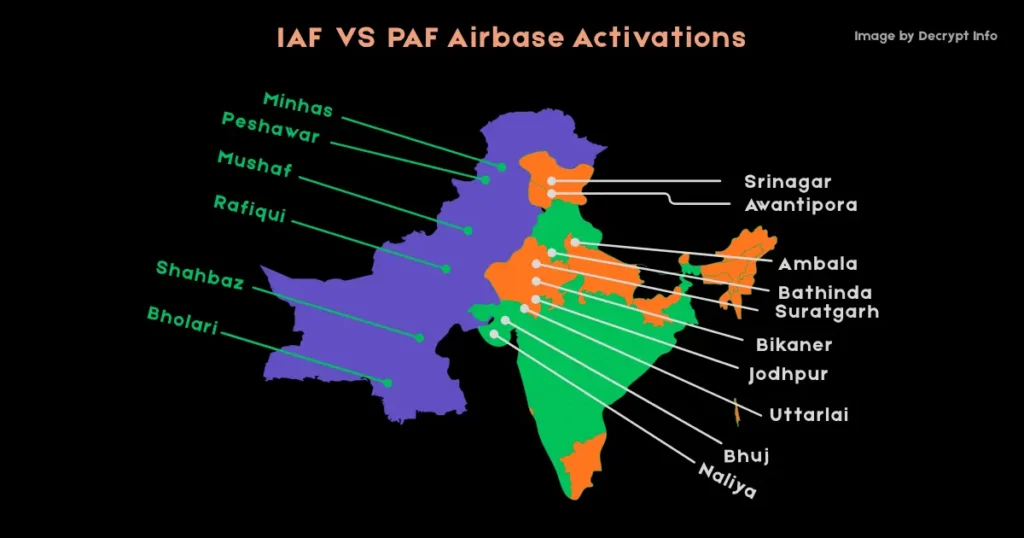
During “Operation Sindoor”, the Indian Air Force used all its airbases located along the Pakistani border. In this operation, different formations of jets were involved in the Dogfight India vs Pakistan. But the leading formation of jets was the one in which French Dassault Rafale jets were led, and the Indian Air Force named it “Godzilla”. After midnight, the Indian jets started flying from different bases to carry out an attack. More than 70 jets were flying from the southern border. On the other hand, the Pakistan Army said all three branches of Pakistan’s military were on high alert. The Pakistani Air Force was also conducting defensive air patrols after anticipating an Indian attack. When the Pakistan Air Force detected the incoming jets via its command centers, it took action. More than 40 jets started flying from the Pakistani side. From the Pakistani side, Minhas, Shahbaz, Bholari, Mushaf, Peshawar, and Rafiqui were used, and other bases were in reserve. Both sides had the support of AWACS and air defence systems. India was using the Russian S-400 air defence system, while Pakistan was using the Chinese-made HQ-9 system.
125 Jets Face Off
At almost one o’clock, from both sides, 110 to 125 jets faced off. With 125 jets, it became the largest dogfight India vs Pakistan has seen after World War II. Both Air Forces started to attack each other by remaining on their borders. Both air forces were trying to hit each other’s jets. The Indian Air Force was ordered to stay inside its border because a jet was shot down by Pakistan in a dogfight in 2019, which led to the capture of Indian pilot Wing Commander Abhinandan Varthaman.
Aircraft Used by Both Sides
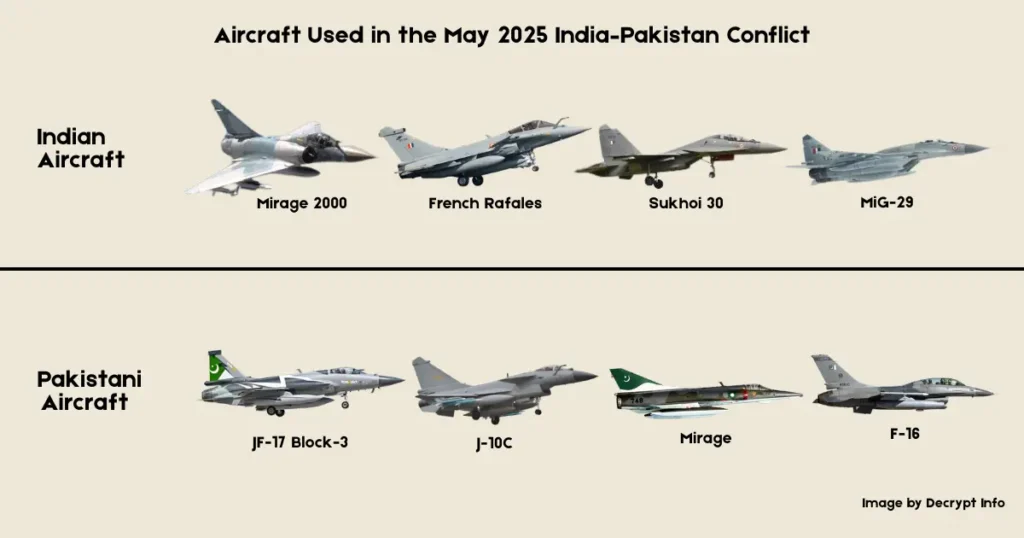
On the Indian side, the operation was led by French Dassault Rafale jets. Additionally, Sukhoi Su-30MKI, MiG-29, and Mirage 2000 also fought along with some Jaguar and Tejas jets, which were used in a backup role. AWACS systems were also there to guide the jets. On the other hand, Pakistan’s J-10C was the counterpart of India’s Rafale. Furthermore, JF-17 Block 3 and Mirage were also in the air. Several F-16s were also part of the Pakistani aircraft fleet. The Pakistani AWACS jets were guiding their own formations.
India vs Pakistan Claims
India started “Operation Sindoor,” and in response, Pakistan started “Bunyan-ul-Marsoos”. During Operation Sindoor, Delhi claimed that they targeted 9 militant bases. The Indian administration claimed that these were bases used against Indian territory. But Islamabad rejected the claims, saying these were civilian areas and mosques. The Indian Air Force claimed they carried out strikes on 11 bases. Pakistan claimed they shot down 6 jets, including three Rafales, one MiG-29, one Sukhoi-30, and one Mirage 2000. The Pakistan Air Force also claimed they struck the Russian S-400 in Operation Bunyan-ul-Marsoos. India said they shot down many Pakistani drones, while Pakistan also shot down more than 50 drones. During the DG ISPR conference, the Pakistan Air Force asserted that all bases involved in attacks on Pakistani soil were hit.
Pakistan’s Upper Hand
During the dogfight India vs Pakistan, Pakistan had the upper hand afterward due to shooting down 6 Indian jets. Even Indian Chief of Defence Staff (CDS) General Anil Chauhan acknowledged that India had lost some aircraft during Operation Sindoor. Some analysts believe that the jets were lost because of wrong intelligence on the range of Pakistan’s PL-15 missiles. The Indian Air Force was expecting that the PL-15 missile range was 145 km, but the actual range was 200 km.
Key Features of the May Conflict
- It was the first time since the 1971 war that India carried out strikes outside the Kashmir region.
- This was the largest air dogfight India vs Pakistan has seen after World War II.
- This was a “Beyond Visual Range (BVR)” fight, not an old-style dogfight.
- Both countries are nuclear powers with powerful militaries.
- Airbases across the region were involved from the Arabian Sea to Kashmir.
Global Support
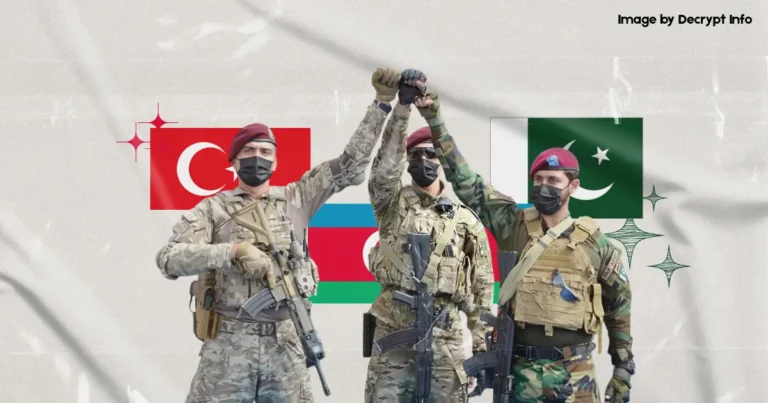
A clear difference in diplomatic support was visible during the Indo-Pak conflict of May 2025. The diplomatic picture was telling. No major country openly supported India’s stance. But on the other hand, Turkey, Azerbaijan, and China openly backed Pakistan. Even the Indian Deputy Chief of Army Staff, Lt. Gen. Rahul R. Singh, claimed that Pakistan had live information about the position and operational status of India’s missiles, which was provided by China. Additionally, some media outlets claimed that Turkish transport aircraft were deployed near Pakistan to assist.
The May 10 Ceasefire
After Operation Sindoor and in response, Operation Bunyan-ul-Marsoos, Delhi and Islamabad agreed to a ceasefire at 11:30 UTC. Both DGMOs, Lieutenant General Rajiv Ghai and Major General Kashif Abdullah, established contact and agreed to a ceasefire. The interesting fact was that the official announcement of the ceasefire was not made by either country. US President Donald Trump announced the news of this ceasefire. Both countries agreed to stop operations without any terms and conditions.
Final Thoughts
The four-day dogfight India vs Pakistan shows how important air superiority is in this modern era. Long-range missiles and radar networks are crucial in air combat. Nowadays, the air force is more important than ground forces. Some Indian analysts believe that India is confronting not only Pakistan but also China. The Indian Air Force is learning its weaknesses from this conflict. Moreover, Indian military experts say that now Delhi should be prepared for two fronts.