
“The enemy of my enemy is my friend.”
We commonly see this in world politics. In 1949, there were 12 countries in NATO, but today 32 countries have joined. This shift from 12 countries to 32 shows the reshaping of the alliance. In today’s geopolitics, some countries are distancing themselves, but others still support each other like brothers, assisting each other today just as they did in the past. This article explores the top 10 countries that support each other.
Table of Contents
10: Latvia and Lithuania
Russia’s attacks on Ukraine’s territory make Latvia and Lithuania insecure. Hence, closer than ever. This insecurity naturally keeps them close and united on every foreign matter. Historically, when German forces attacked, Lithuanian tribes helped and supported present-day Latvia. Both are major trading partners for each other. Their mutual support was clearly seen during the Baltic Way, when over 2 million people joined hands across Latvia, Lithuania, and Estonia. Both have joined the EU and NATO to counter external threats.
9: Finland and Estonia
Both are good friends and have a history of backing each other in difficult times. For instance, during the Winter War, Estonia sent its 1,000 volunteers to help Finland. Similarly, Finland supported Estonia when it gained independence. Both countries share a border with Russia, a factor that constantly keeps them closely bound. The Finnish language also acts as a bridge of cooperation and friendship. On 30 June 2026, both countries partnered with NestAI to enhance their defence capabilities using artificial intelligence (AI).
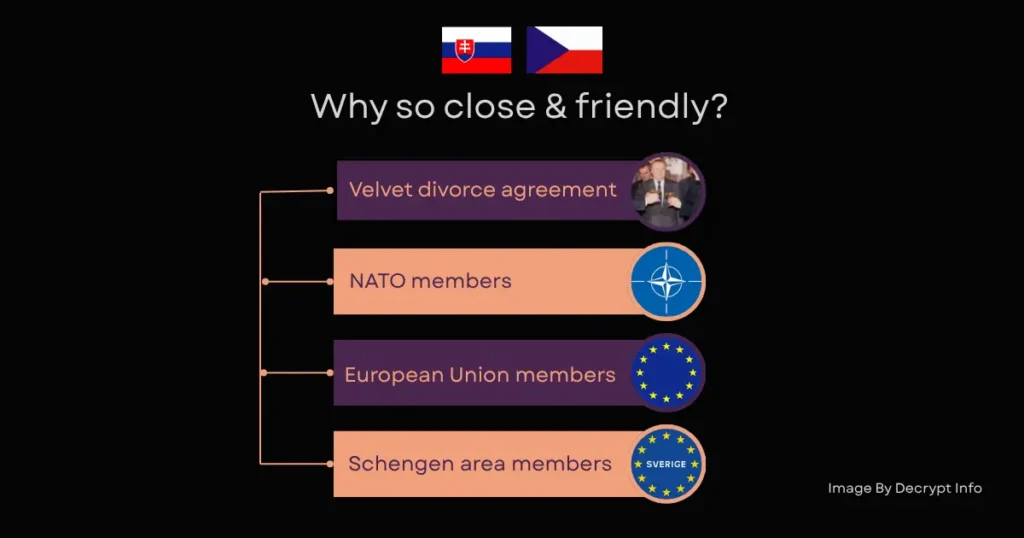
8: Czech Republic and Slovakia
The Czech Ministry of Defence said on 26 January 2026 that Slovakia is historically the “closest partner”. Words like these show just how strong their bond really is. It is a very rare case where countries have separated without bloodshed, but the “Velvet Divorce” agreement is one of them, where Czechoslovakia turned into the Czech Republic and Slovakia without any conflict. A 2023 report shows that $26.9 billion in trade between them reflects the increasing joint efforts.
7: USA and Canada
Both have good relations, but there is some disagreement on politics and tariffs. Let’s look at the major points that put them on the list of top 10 countries that support each other.
- Both fought on the same side during WW1 and WW2.
- Canada opened its airports for US flights after the 9/11 attacks.
- During Hurricane Katrina, Canada helped American people with its rescue teams.
- The US helped Canadian citizens during the ice storm in Quebec.
6: Canada and the Netherlands
Do you think only adjacent countries can have good relations? Actually, no. Countries more than 4,000 km away from each other have a special love story. Canada and the Netherlands have had good relations since WW2. Canada helped the Dutch nation during WW2 against Nazi occupation. Additionally, the Canadian Air Force provided food to Dutch citizens during Operation Manna. One interesting thing is the Canadian Tulip Festival, which is held every year in Canada. It began as a symbol of gratitude from the Dutch people for Canadian support.
5: Kosovo and Albania
Getting recognition for a newly established country is the first step to achievement for them. And every recognition counts. Kosovo received its first recognition from a friend, Albania. Both countries stand by each other in international matters. During the Kosovo war, many Kosovars took refuge in Albanian territory to show huge support. A shared majority in religion and ethnicity brings both countries together and promotes cooperation. Over 90% Albanian ethnicity and the same language make Albania the strongest ally of Kosovo.
4: Poland and Hungary
A famous Polish proverb is that “Pole and Hungarian, two brothers, both for sword and for glass.” More than just a proverb. Even CBOS (Centrum Badania Opinii Społecznej) conducted a survey, in which the majority of Polish people view Hungary as their favoured nation. We also saw Hungary’s assistance to Poland when Nazi Germany attacked Gdańsk. Not only did Hungary prove its friendship, but Polish volunteers also fought for the liberation of Hungary in 1848.
3: New Zealand and Australia
New Zealand soldiers fought alongside the Australian Defence Force during World War 1 and World War 2. A Lowy Institute survey showed the love Australians have for Kiwis, with 85% viewing them as their closest ally. Both countries share intelligence with Five Eyes to improve their security. Whether it’s the Korean War, the Vietnam War, or even Afghanistan, both were out there fighting together. Both help each other to boost their economies with a free trade agreement between them.
2: USA and Israel
Whether it’s the Gaza War, the Yom Kippur War, or any other conflict, America is always on the side of the Israeli state. Israel is the oldest and strongest ally of the US in the Middle East. Every year, Washington gives military aid to Israel, and Israel is the highest recipient of US foreign aid. From air defence systems to fighter jets, everything is mostly US-developed for them. And there’s no denying that most American presidents have said they will protect Israel.
1: Turkey and Azerbaijan
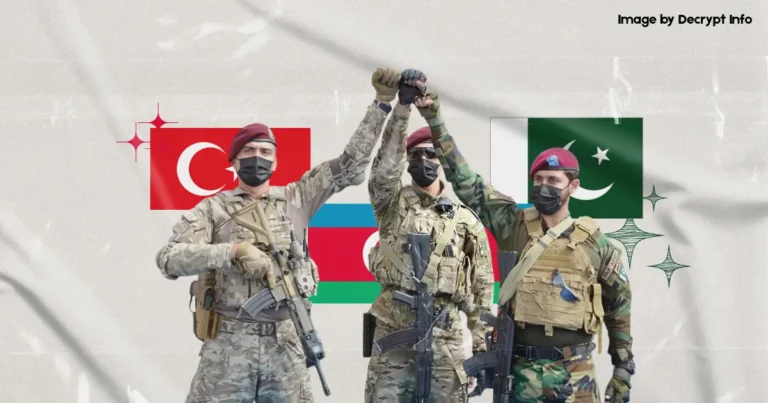
We have heard the common phrase from the common man: “One Nation, Two States.” Turkey was among the first nations to officially recognize Azerbaijan as an independent state. Turkey was a major ally that backed Azerbaijan in the Nagorno-Karabakh war. Even some analysts believe that Azerbaijan gained the upper hand because of the support of Ankara. Azerbaijan also supports the Turkish state in international matters, including the key issue of Northern Cyprus. The two countries also signed an agreement stating that if one nation were attacked, the other would step in to help.
Final thoughts
Mutual interest, religion, and ethnicity play a crucial role in bringing countries closer together. Analysts believe that in today’s geopolitics, it’s hard for any country to avoid taking sides—it’s either take sides or face sanctions. We have explored the top 10 countries that support each other, which shows how some countries still maintain strong historical bonds. These relationships will remain unchanged because they are bound by more than just brotherhood. They may also form new strategic groups of countries, but they will always remain close.